BUILDING A BETTER ANN ARBOR
The Housing Crisis, Health, and Hope


The Apartment
Nothing could ever subvert the glory of senior year as brilliantly as Apartment #5.
Upon a stroll down 4th Avenue, the first thing you’ll notice is the ambiguous shade of blueish-grey coating the entire building, originally a house but now subdivided into cramped confines for its poor residents. After getting blinded by the bright blood-red window panes and traversing through the dirt rock path to the back, you’ll realize your journey has only begun. After walking up two flights of suspiciously creaking stairs, you’ll find yourself face-to-face with the less-than-inviting front door, marked with an oxidized metallic “5”. It doesn’t stop there, though: you’ll find out later that no amount of air freshener or Febreze can mask the musky smell, your landlord will laugh in your face when you point out the mold on the vents because after all, “this place is getting destroyed next year,” and your bedroom has no closet but an incessant draft of cold air that renders it a solid ten degrees colder than the rest of the apartment.
I moved in that fall thinking I’d gotten lucky. The apartment was close to campus, The Ride’s #4 bus I loved so dearly was a mere few steps away, and the rent was manageable by Ann Arbor standards, which is to say: technically within budget but still making a dent in my wallet. Sometimes the building was old in a way that felt quaint and charming. The wooden living room wall occasionally made a nice backdrop for pictures, and I liked sinking into the soft mattress of my room, amidst the cold air and stained carpet and occasional cockroach visitor, when I was too tired to think.
But things feel charming only until they’re not. Apartment #5 was full of clanks from the radiator through frigid February nights, broken dinner chairs that no amount of superglue could repair, and fuses that blew at the start of a hairdryer.
Then the construction started. The landlord didn’t tell us about it, “as usual,” I’d say with a smile. What was originally hoped to last a week out of ideal simple fixes (like burst pipes) was sustained and disruptive. Heavy machinery would arrive before seven in the morning, ground-level vibrations would rattle the coffee mug on my desk, and dust would settle on the windowsill no matter how many times I wiped it. I wasn’t sure, and still am not sure, if this was the work of our leasing company or the city or some third mysterious entity, but I was frustrated by the lack of transparency and what felt like a never-ending siege outside our apartment.
Lately, I’ve been sleeping badly. Not dramatically reduced from my usual attempts of a healthy 8 hours, or in that illness-sort-of-way, but in the slow, meandering mornings where living in the apartment felt unbearable. I started making plans to do work at libraries or cafés past my original bedtimes, solely to avoid coming back to what my roommate called “seventh circle of hell.” We would often wonder, half-joking, if someone had cursed us with a year’s worth of bad karma.
I’m not alone, it seems. According to a review conducted by Krieger and Higgins in 2002, poor housing conditions can impact health conditions in a myriad of ways that I am no stranger to—sleep, mental health, respiratory infections, lead poisoning—the list goes on. Housing first found its roots in public health in the 19th century, when reports of infectious diseases and injuries in Britain’s slums pushed legislators to tackle overcrowding and poor ventilation. As the U.S. slowly began adopting this model in the 1930s with federal public housing projects and the National Housing Act of 1934, housing standards improved as hygiene became a pillar in this new era of public health.
Today, public health departments work on housing through multiple avenues: whether implementing “Healthy Homes” programs to improve the quality of indoor environments or developing and regulating housing guidelines and codes, the future is geared toward confronting substandard housing, seemingly. Yet, housing is still an important social determinant of health (SDOH), one of many defined by the World Health Organization as “the conditions in which people are born, grow, live, work and age, and people’s access to power, money and resources.” In the United States alone, according to the National Safety Council, about 30 million nonfatal injuries occur in and around the home, and 107,800 people die from injury-related home causes, most of which comprise poisoning, falls, and respiratory hazards, to name a few.
Housing can protect and harm you: it is a safe haven to return to after long days, to feed and bathe and rest yourself, but it can also poison and kill you from the inside, with its vectors for disease that can completely dismantle your daily routine. The chronic stress of housing can activate your hypothalamic-pituitary-adrenal axis, the system that governs your stress response. Cortisol, which tends to ebb and flow depending on your needs, instead pools, degrading your sleep architecture. You get fewer hours of slow-wave sleep, the restorative stage for the body to repair itself, as your immune system is perpetually on a deficit. Running on air for months to years is linked to cardiovascular disease, metabolic dysfunction, and accelerated cellular aging, underscoring the need for stable, good-quality housing.

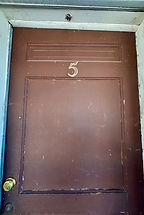
“After walking up two flights of suspiciously creaking stairs, you’ll find yourself face-to-face with the less-than-inviting front door, marked with an oxidized metallic ‘5’."
The City
I have complicated feelings about Ann Arbor; I grew up in Ypsilanti, just a few miles east, a city known (if known at all) for its cheaper housing and taxes and proximity to this one. While I attended school in Ann Arbor my whole life, I watched it from close enough to know its reputation as a "bubble" isn't entirely unfair. Life here can feel beautiful in a way that requires not looking too hard at what holds it up. User chriswaco on Reddit put it plainly: "Ann Arbor is a nice midwestern town with an oversized university. Housing is expensive. Taxes are expensive. The people are well-educated and generally friendly, though sometimes cliquish." I read that and laughed in recognition. The Ann Arbor Government website reports that about 91% of residents rated the city as "excellent or good to live in,” and yet Health for All Washtenaw finds that Washtenaw County housing is in the worst 25% of both Michigan and U.S. counties. Both things are true at once, which is maybe the most Ann Arbor thing possible.
The numbers seem stark once you start looking. Homelessness in the Ann Arbor area increased by 77 percent between 2022 and 2025, according to reporting based on point-in-time counts, a figure that stunned even longtime housing advocates when it was released. The Ann Arbor Area Community Foundation commissioned a comprehensive Washtenaw County Housing Affordability and Stability Study in 2025, which documents what many renters already know experientially: housing costs have outpaced incomes and affordable units are in critically short supply. Derek Thompson and Ezra Klein, in Abundance, make the supply-side case, that progressive cities, including university towns like this one, have systematically underbuilt housing relative to demand, often in the name of preservation or neighborhood character, and that the result is a scarcity that functions as a regressive tax on renters and a windfall for owners. Ann Arbor is a case study in exactly that dynamic. A politics nominally committed to equity has, for decades, produced housing costs that are structurally inequitable.
“Costs have gone up. Supply has not kept up with demand in most communities,” Jennifer Hall, the Executive Director of the Ann Arbor Housing Commission, which works to address local housing needs via zoning and building projects, mused to me in March. “I think a lot of what has contributed to that is very restrictive zoning. It’s become harder and harder to build. Now, we’re trying to increase the ability to develop. If we had done this 30 years ago, I don’t think we’d be in the housing crisis that we’re in, in Ann Arbor.”
As I spoke with Hall over Zoom, I sat in the School of Public Health (SPH) café on a slow Monday morning. It was almost 11 am, and one of those ambiguous in-between times when students pretended to be productive but fell into conversation nonetheless. Around me, laptops chimed with Google Calendar notifications every few minutes, punctuated by the hiss of the espresso machine by the wall.
I arrived early, partly to claim a table near the window and partly to settle the nerves of having my first real interview for this project, that too with someone who had spent decades doing this work. My notebook lay open beside my laptop, pages filled with arrows and underlined questions, as I asked Hall how she had come to her current role at the Housing Commission.
Over 30 years ago, Hall was a student at the University of Michigan, having studied political science and familiarized herself with housing after taking a Poverty and Homelessness class. This kickstarted her activism within an action committee, where she raised awareness about homelessness in Ann Arbor (“house people, not cars”) and participated in squatting efforts at houses tagged for demolition by the Downtown Development Authority (DDA). That advocacy work eventually contributed to the creation of Avalon Housing, now the largest nonprofit providing permanent supportive housing in Ann Arbor. I find myself amazed by Hall’s decades-long commitment to housing, and visualize her as a college student, around my age, getting radicalized by a single class and spending the next thirty years doing something about it. I feel inspired in the moment, sitting with the smallness of my own concerns about housing and construction, and also, somehow, the legitimacy of them.
Having stepped into the Executive Director role in 2011, Hall believed that COVID-19 played a unique role in the worsening issues with housing. “During COVID, a lot of people left the trade, making human labor much more expensive. Materials are also much more expensive. And now with all these tariffs, it's making everything more expensive. And because of the high demand, it's making land more expensive.” Hall and I also discussed city constraints, and how the pre-COVID-19 era allowed for more budget funds to be leveraged in projects—”$20 to $25 to get a project done,” she said. However, the higher costs of today have required the Commission to, Hall added, “put more local funds in to fill the gap than we used to, which means slowing down the development process.”
Hall spoke quickly and with precision, answering questions in clear, concise sentences. For the first several minutes, her tone remained formal, almost brisk, the cadence of someone accustomed to this work after years of it. But as we continued talking about the history of housing advocacy in Ann Arbor and the people she had worked with, her voice softened slightly when the conversation became more conversational.
The Commission worked with Packard Health Clinic, which had sent teams of medical personnel to various property sites to provide basic medical care and connect primary care physicians to unhoused individuals. As we discussed the anecdotal snippets collected from her time, Hall paused before adding a point I hadn’t considered. “Unhoused individuals have a hard time getting surgery. If folks have a health need and they need to have surgery, then they can't really get surgery unless they have a place—a home to go to. You can't be discharged to the street.”
I stopped writing for a second. In the moment, I was struck that I hadn’t considered something so simple, yet so obvious in the context of housing insecurity for Ann Arbor residents and beyond. Collecting my thoughts, I moved on to ask Hall about future initiatives, such as the incoming affordable shared housing initiative through the Washtenaw Housing Alliance. The program, initiated a few weeks ago, aimed to match older residents with extra space in their homes with individuals in need of safe, stable housing, with the terms determined by both parties.
“I think this is a way to better utilize these otherwise mostly empty homes by pairing up someone who's older, who needs some assistance, whether that's helping with groceries or mowing the lawn, and to provide somebody else at any age, the opportunity to help them out, but also to have no-cost or low-cost housing,” she said. “So I think it's going to meet that need for a niche part of the marketplace.”
Yet, Hall remained steadfast on the issue of limited housing available, in general. “My understanding (although we are not running the program, I do think it's a good program) is that it's been harder to recruit the people with the homes so far than it is to recruit people who want to live in the homes, which makes sense; you really have to directly find homeowners who know about the program.”
Despite the emergence of programs to make better use of existing units, there remained a need for additional housing to be built. Amid the rise of luxurious high-rises downtown (pun intended), the Commission, City Council, and other stakeholders had projects running alongside overall development, including the Land Use Plan 2050, which had been unanimously adopted by the City Council. It represented a political commitment to density, mixed-income development, and transit-oriented housing that acknowledged, at least implicitly, that the previous several decades of policy produced something that now needed correcting.
But plans were just plans. In terms of projects, the DDA had several projects in motion to expand housing accessibility and general walkability for residents. The 4th Avenue project, scheduled to begin next month and run through December, would involve construction equipment and temporary lane closures. Simultaneously, and just adjacent to it, was the planned 350 S. Fifth Avenue development. This former YMCA site near the Blake Transit Center would be adorned with affordable and market-rate units, along with ground-floor public uses. The 4th Avenue work was funded in part by roughly half a million dollars in federal and state grants, including support from the Michigan Economic Development Corporation and MDOT’s Safe Streets & Spaces program.

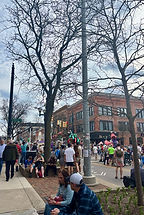
“If we had done this 30 years ago, I don't think we'd be in the housing crisis that we're in, in Ann Arbor.” — Hall
The Street
After attending my English class virtually, I found myself in the same SPH cafe, yet at a different table and with a granola bar and turkey stick for fuel. I tapped my fingers on the tabletop incessantly, stressing about the expenses I’d accrued lately in trying to avoid my apartment as much as possible, leaving me to survive off of whatever small snacks I could snag here and there. As I wolfed down the disgusting-tasting turkey stick—I should’ve gotten beef, I thought to myself—and relished the chocolate-chip, saccharine goodness of the granola bar saving my tastebuds, I watched the clock hit 3 and stepped outside to take a call, the end-of-March air biting at my neck. On the other end was Nani Wolf, an urban planner working on the 4th Avenue project—the very stretch of street that had, for months now, dictated the pace of my mornings.
Wolf told me she didn’t always know she’d end up here. She grew up in Michigan, drawn first to environmental science before realizing that the question she cared about most wasn’t just nature, but the built environment—how people, infrastructure, and ecosystems coexist, and sometimes collide. Urban planning, she explained, gave her a way to intervene. To shape, however incrementally, the spaces that shape us back.
The 4th Avenue project, contrary to my sleep-deprived frustration, had not begun as chaos. It began, she said, with about three years of design: public engagement sessions, conversations with city staff, and partnerships across agencies. By the time she joined six months ago, much of the design was already finalized. Her role was to shepherd it through construction, translating plans on paper into something tangible. “Accessibility was a big piece of it,” she told me. “We worked closely with the disability community to think about how people actually move through space.”
That movement, it turns out, was far more deliberate than I had ever noticed. The tactile strips embedded in sidewalks, ones I had absentmindedly stepped over for years on campus, existed to guide low-vision pedestrians. Audible crossing signals at intersections like Liberty Street offered another layer of navigation. At mid-block crossings, where there were no stop signs, rectangular flashing beacons alerted drivers to pedestrians, a small but critical intervention in a city that prided itself on walkability. Some of these details had come directly from those who needed them most. A walking tour with members of the disability network, including a representative who was blind, reshaped how planners thought about the boundary between sidewalk and greenery. What I’d always registered as aesthetic choices were, in reality, decisions rooted in access.
It made me pause. For months, I had experienced 4th Avenue as something being done to me, with its bustling construction impairing my sleep and routine. But for others, this same stretch of road had long been something far more exclusionary, something that required redesign to become navigable at all.
Still, even as Wolf described these improvements, the question of cost came up. “Cities don’t operate with profit in mind,” she said in response to my poorly-worded question, almost laughing. “We operate within a budget. And we’re definitely not making budget on this.” Instead, projects like 4th Avenue were patchworks of funding: over a million dollars in grants, contributions from partners like The Ride, and even investments from developers tied to nearby housing projects. The upcoming development at 350 South Fifth Avenue—the former YMCA site—has, she noted, contributed funds to improve the surrounding streetscape and utilities, a reminder that infrastructure and housing are rarely separate conversations.
In some cases, these projects were strategically bundled together to unlock more funding. A housing initiative might be paired with a streetscape project, allowing the city to “match” a portion of funds and secure larger state grants. It was, in Wolf’s words, a way of leveraging what exists to build what doesn’t yet.
And despite all this maneuvering, the underlying issue remained stubbornly intact.
“Housing is an inelastic market,” she told me. “There’s way more demand than supply. So landlords can name their price.” As Ann Arbor grows, the imbalance worsens. The solutions, Wolf explained, are neither quick nor universally agreed upon. Build more affordable housing. Increase overall supply, even at market rate, to relieve pressure. Consider rent control, though Michigan law currently prohibits it. Each path comes with trade-offs, and each is met with resistance from a city that both embraces and resists growth. “People don’t always like the idea of continuous growth,” she said. “But if we don’t address it, the problem doesn’t go away.”


“Housing is an inelastic market. There's way more demand than supply. So landlords can name their price.” — Wolf
The People
A few nights later, housing came up again in a very different setting.
It was nearly one in the morning when my friend Joanne and I stumbled back from Rick’s American Café, a sticky-floored student bar that had been packed to the brim that Thursday night. She carried a Raising Cane’s kids’ meal in one hand; I had a half-eaten BTB burrito wrapped in foil. By the time we reached her apartment, a light rain had started falling, dotting the pavement and soaking the sleeves of our jackets.
Inside, we sat at her small dining table under the dim yellow kitchen light. Joanne pushed aside a stack of textbooks to make room for her food. The room smelled faintly of fried chicken and rain-damp clothes.
I placed my phone on the table and hit record.
“Okay,” I laughed, still a little tipsy. “This is Arya Kamat from English 425.”
Joanne rolled her eyes.
“You’re really doing this right now?”
We had spent the week circling toward this interview, never quite finding the right time to do it. We had gotten matcha and studied side by side, not saying much. Another day, we had eaten sushi and bought frozen soda pops from the new Korean mart on South U. We had gone to a prehealth event with therapy dogs you could pet, and subsequently wandered to another nearby event with pandan cake, eating it with our fingers until they turned green and sticky with sugar. A few days before, sitting with our coffee and our laptops, we had talked about the future and its myriad of possibilities, feeling it become increasingly real as graduation approached.
Although we could have had this interview much earlier, it felt like an appropriate time to do it then, post-going-out, right in the heart of the apartment she had lived in for two years, the same amount of time we had been friends for. We were, technically, still somewhat in the spirit of the evening, and all of the other evenings we’d hung out. Neither of us really cared, and Joanne didn’t hesitate as I began to ask her about housing.
“Imagine waking up and there’s a bat flying around your room,” she said. The first time it happened was last September. She woke up at three in the morning to the sound of wings beating against the ceiling.
“I thought it was a bird,” she told me. “I didn’t even think bats were in Ann Arbor." Instead, she spent hours frozen under her blankets while the animal circled her bedroom. Bats were one of the few animals capable of transmitting rabies in Michigan. Joanne, who was from New York and came to Ann Arbor planning to go to medical school and eventually specialize in cardiac surgery, spent her fall making three separate ER trips for rabies boosters, on specific days, spaced apart, none of which could be missed.
“I almost didn’t go,” she admitted. “I have out-of-state Medicaid. I didn’t even know if it would be covered.”
The bat wasn’t a one-time incident, and another appeared a few months later. Maintenance eventually removed it, but the experience left Joanne uneasy in her own home.
“Every noise makes my heart drop,” she said. “Like, what if another one comes out?”
Like many students in Ann Arbor, Joanne chose her apartment primarily because it was affordable. Her rent was about $910 a month, a price that felt reasonable in a city where luxury high-rises often charge double that. “But the cheaper places always have some drawbacks,” she says. “Lead paint, mold, pests…something.”
Listening to Joanne describe the ER visits, missed time working in her lab, and the constant anxiety of sleeping in a room where bats had appeared multiple times, I was reminded of how easily housing problems can spill outward into other aspects of life, like the classrooms, work shifts, and other such routines that structure everyday life.
"I feel like it's a basic human right," she remarked, "to feel safe in your home."
Joanne volunteered at the Delonis Center, a shelter for unhoused individuals or those in need of secure housing on West Huron. Every weekend, she cooked in the community kitchen and served morning meals. She often spoke to people who visited, having met people with degrees, and people who arrived at the shelter by way of a single bad year that compounded into several. When I mentioned what Jennifer Hall had told me, that unhoused individuals often didn’t get surgery because you couldn’t be discharged to the street, Joanne didn’t need me to explain.
"When you lack preventative care," she said, "you end up needing surgery. It's the most costly intervention, the most invasive. And it's the least accessible." She got quiet for a second. "We see the same problems globally in access, transport, insurance, recovery, and housing. And then we see them right here, a few miles away, and somehow it registers differently."
It was late. I stopped the recording and swiveled my phone face-down on the wooden table. We finished our food and talked about other things—I don’t exactly remember what they were, but perhaps a good kind of nothing. Outside, the rain was still coming down. At some point, I opened the Lyft app, watched the little car inch toward Joanne’s place, and felt the particular satisfaction of my bedtime creeping closer. I was full and warm as we waited on the couch. Somewhere nearby, the construction equipment sat idle in the dark, waiting for morning.
* * *
Just ten days before graduation, I found myself on a FaceTime call with Alyssa, one of my “awesome” (as she put it) friends from the School of Public Health. It was a chilly, taxing Monday night, and I was sitting cross-legged on my bed in Apartment #5, feeling the familiar draft from my window courtesy of the classic Ann Arbor freeze warning in April, just days after a surprise tornado had touched down nearby, which felt appropriate for the semester we’d had. Before I hit record, we’d been talking about something that had been circling SPH in its own tornado-like way: lecturer layoffs. The class we shared had been taught by a lecturer who’d since been laid off, and we delved into the implications of dwindling faculty positions and contracts not renewed. The public health budget at the federal level was in ongoing freefall, its effects rippling down into departments and classrooms and the people who filled them.
It was a strange backdrop against which to discuss housing, and also, somehow, the only natural one. If there was anything Alyssa and I had learned in our time at SPH, it was that the systems supposed to protect people and the systems failing them were often the same system, just viewed from a different angle.
Alyssa, who is pre-med and had spent four years moving through Ann Arbor housing with a kind of reluctant expertise, laughed a little as she started from the beginning.
Freshman year: the dorms, like most. Sophomore year: an off-campus apartment near the Big House, a twenty-five-minute walk from campus, one roommate, manageable. Junior year: a plan for a six-person house that collapsed in June, when the landlord notified them that she had made a mistake. The current tenants were renewing, and Alyssa and her friends were suddenly without a place to live for the fall. They scattered, as one girl went to Landmark alone, two went to University Towers, and Alyssa and the remaining two took an available unit in the same high-rise, a deal offered partly because the landlord needed them to sign fast.
Then came senior year. When the group went to tour what would become their next apartment, Alyssa couldn’t go. She signed the lease anyway, on the word of her roommates that it was fine, the better of the two options they'd seen.
"They really downplayed how small the room actually was," she told me, smiling wryly.
The room was around ninety square feet (“Smaller than a dorm room?!” I exclaimed). Instead of a real window, there was a fire escape. No space large enough to hold a bed and a dresser simultaneously, let alone a desk. "It was musty," she put simply.
But the room, she told me, was something she probably could have gotten past.
What she couldn’t get past was what her parents found when they helped her move in. Cleaning the bathroom, they discovered the bathtub and shower area covered in black mold, thick in the caulking throughout. When her mother tried to purify it with bleach, it didn't work. Her father, who knew a guy who specialized in mold testing, called him in to assess the specifics of the strain scattered in the bathroom.
The results came back: the mold was airborne, and the spore count in the bathroom was higher than the levels outside. And it wasn't just any mold. It was a toxic strain, one capable of lasting health consequences.
"My parents were no longer comfortable with me living there," Alyssa said.
She told her roommates, and after much discussion, they chose to stay. Alyssa, however, moved out after one week, and through her parents' lawyer, the landlord was persuaded to return her security deposit and release her from the lease.
I thought about the mold in her bathroom and the mold on the vents in my own apartment, the one my landlord laughed off. While I hadn’t thought to test the mold itself, I thought about the persisting respiratory illness I’d been suffering with for the last two weeks, coughing my lungs away and waking up with stinging sore throats, calling off lab numerous times. I thought about how that could’ve been from the spores in my apartment, the unknowing dangers that exist with us in our own spaces.
For the first semester of her senior year, Alyssa commuted from home, about an hour each way, four days a week, staying sometimes twelve hours on campus between morning arrival and the last obligation of the day. She became a regular in the hospital visitor parking lot because it was cheaper than the street meters near our school building, though some days she'd arrive to find it full, the stress compounding into everything else. During a blizzard in December, her final exam commute stretched to nearly two hours. "I was just freaking out the whole time," she said. "I didn't want to be driving. But I had to get there."
Second semester, she found her way to a sublease at The Verve, the newest and shiniest high-rise in town, as different from her half-underground, mold-adjacent apartment as a place could be. She now paid about half the normal rent—around $1,000—to live in someone else's study-abroad semester in an apartment with a pool, a gym, a café that gave out free coffee on Friday mornings, and study spaces that were clean and open late.
"It's really helped my mental health," she said, and she sounded like she meant it.
But the relief didn’t flatten the bigger picture. "Right now," she said, "no matter where you live in Ann Arbor, you're probably going to pay a pretty penny, even if it's a place that's not so nice." The high-rises are going up everywhere; she counts two or three under construction on a single stretch of street. Yet they're charging nearly $2,000 per person per month in multi-person units, and the cheaper apartments haven't gotten cheaper.
"I feel like there's not really a middle ground," she said.
And then the conversation circled back, as it had with Joanne, to the question of what this all meant for health. Alyssa didn’t need much prompting; she had spent four years learning about the social determinants, the conditions that shape health long before any patient ever walks into a clinic.
"When we think about chronic disease," she said, "somebody who can't afford a nicer apartment is going to have to settle for something cheaper. Well, in my case, that meant a place with toxic mold, which could have had long-term health consequences. And that only makes your lifetime health burden worse."
She paused for a moment. "I think making sure that people have access to living spaces that are clean and keep them safe can do just as much for their health as something a doctor can physically do to help them. If not more."
This was, I realized, also what was at stake in the layoffs we had been talking about earlier. Public health infrastructure, the departments, the researchers, the educators who taught students like Alyssa and me to think this way, was being quietly hollowed out at the same moment that the problems themselves were becoming more visible.
You could build the Verve on every corner in Ann Arbor, and it wouldn’t fix the fact that someone, somewhere, was still signing a lease for a closet-sized room without seeing it first. The conditions that made housing harmful didn’t disappear when a new building went up. They just became easier to overlook.
"It's selfishly disappointing," Alyssa admitted, "to think that maybe in the future, with more supply, rent will go down—and we didn't get to experience that." She laughed. "But I guess it's nice for the people coming in."
We talked for a little while longer. She had a public health exam on Friday. I had this paper due. At some point, her face pixelated on the screen, the connection going unstable, and we said goodbye through a frozen frame. I set my phone down on the bed and sat in the draft for a moment, not moving.


“I think making sure that people have access to living spaces that are clean and keep them safe can do just as much for their health as something a doctor can physically do to help them. If not more.”— Alyssa
The Future
Construction on 4th Avenue is set to begin May 4, 2026. It will last until December, pausing briefly for Art Fair, when the city will momentarily resemble the version of itself it prefers to display: vibrant, walkable, whole. When it resumes, the street will be torn open again as excavators carve into asphalt, orange cones redirect foot traffic, and dust settles on every windowsill within a block radius, including mine. The plans say it will come back better. Wider sidewalks, bus shelters, trees planted at careful intervals, and lighting calibrated for safety rather than aesthetics. Down the block, on the former YMCA site, affordable housing will eventually rise in a building that doesn't exist yet, on a timeline no one can fully guarantee.
A few nights ago, I was walking back from a hangout with a friend around eleven, cutting down 4th Avenue as part of my daily routine, sleep-deprived and annoyed about nothing in particular. The construction equipment was sitting idle at the curb: the excavator and the orange cones, the chain-link fence around the section of sidewalk they'd already torn up. I'd walked past it so many times it had become ambient, something my brain naturally registers on my strolls back home. But that night I stopped and actually looked at it, maybe because I was tired enough that my brain had run out of other things to do.
There was a sign stuck in a patch of grass at the intersection of 4th and William. I'd seen it before without properly reading it, but I really looked at it this time. It noted accessible pedestrian improvements, new street lighting, transit amenities, and estimated completion in December 2026. Below that, I saw a rendering, the block as it would look when finished, clean and wide and full of illustrated people moving through it easily. Streets were cleanly paved, shouldered by trees and crosswalks and bright-white buildings. It was cold, but I stood for a while, committing that sign to memory. The thing is, I knew what had gone into that rendering. Three years of design, Nani Wolf had told me, with plans to make the street more accessible for everyone. The rendering made it look effortless, as they always do, all that invisible labor flattened into a jpeg of smiling illustrated pedestrians.
The street was quiet. Somewhere down the block, a door opened and closed, and a woman walked out with a dog, and the dog sniffed at the chain-link fence and then lost interest, and they kept walking. I watched them go.
I will be gone by August. The construction will still be going on. The building on the YMCA site will still not exist. Someone will move into Apartment #5 and find the draft and the vent and the fuses, and they will either have the option to leave or they won't, and that will determine almost everything about how the year goes for them. The city will be mid-rebuild, as it always is, and whoever is here will navigate it with whatever margin they have left.
I looked at the sign one more time. Then I zipped up my jacket and walked the rest of the way home, up the dirt rock path, up the creaking stairs, past the oxidized metallic 5, into the confines of my apartment.

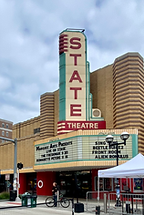
“The city will be mid-rebuild, as it always is, and whoever is here will navigate it with whatever margin they have left.”
Thank you!
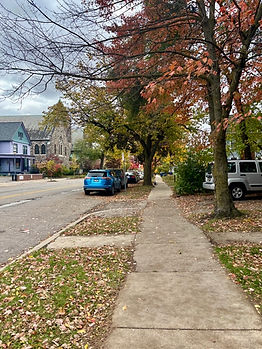
To Jennifer Hall, Nani Wolf, Joanne, and Alyssa: for your time and honesty. This piece would not exist without you.
To my Sweetland Writing Minor capstone class and my consultant Jeremiah Chamberlin: for reading early drafts, asking great questions, and making this sharper than it would have been otherwise.
And to you, for reading.